Terabyte to Megabyte Formula
To convert terabytes to megabytes, multiply the terabyte value by 1,000,000.
Megabytes = Terabytes × 1,000,000
1 TB = 1,000,000 MB
Common Terabyte to Megabyte Values
| Terabytes | Megabytes |
|---|---|
| 0.001 TB | 1,000 MB |
| 0.01 TB | 10,000 MB |
| 0.1 TB | 100,000 MB |
| 0.25 TB | 250,000 MB |
| 0.5 TB | 500,000 MB |
| 0.75 TB | 750,000 MB |
| 1 TB | 1,000,000 MB |
| 1.5 TB | 1,500,000 MB |
| 2 TB | 2,000,000 MB |
| 3 TB | 3,000,000 MB |
| 4 TB | 4,000,000 MB |
| 5 TB | 5,000,000 MB |
| 8 TB | 8,000,000 MB |
| 10 TB | 10,000,000 MB |
Magnetic Data-Tape Cartridges: From Megabytes to Terabytes
What Is a Magnetic Data-Tape Cartridge?
A magnetic data-tape cartridge is a removable storage medium designed for saving computer data on a long strip of magnetically coated film. The tape is enclosed in a protective plastic cartridge and inserted into a compatible tape drive. Unlike disk storage, which can move directly to different files, tape generally reads and writes information sequentially. This makes it less convenient for frequently accessed files but highly effective for large backups and archives.
Tape capacity was once measured in megabytes and gigabytes. Modern cartridges commonly hold several terabytes. Using decimal units, 1 TB equals 1,000 GB. Capacity should normally be compared using the cartridge’s native capacity. Compressed capacity is an estimate and depends on how effectively the stored files can be compressed.
A Short History of Computer Tape
Magnetic tape was first developed for sound recording before being adapted for computers. IBM announced its Model 726 magnetic tape unit in 1952. Its large open reels helped early computers process and store information more efficiently than punched cards. According to IBM’s history of magnetic tape, tape became a dominant medium for offline storage and data transfer for several decades.
During the 1980s, compact cartridges began replacing open reels. Early cartridge systems offered capacities measured in hundreds of megabytes. Later formats reached gigabytes, while technologies such as Digital Data Storage, Travan and Digital Linear Tape served different computer and business markets.
Linear Tape-Open, better known as LTO, arrived in 2000 and became an important open standard for enterprise storage. Capacity increased across successive generations—from 100 GB on an LTO-1 cartridge to multiple terabytes on later versions. Modern LTO cartridges can hold tens of terabytes natively, demonstrating the extraordinary growth of tape storage.
HDD drive in Terabytes and Megabytes
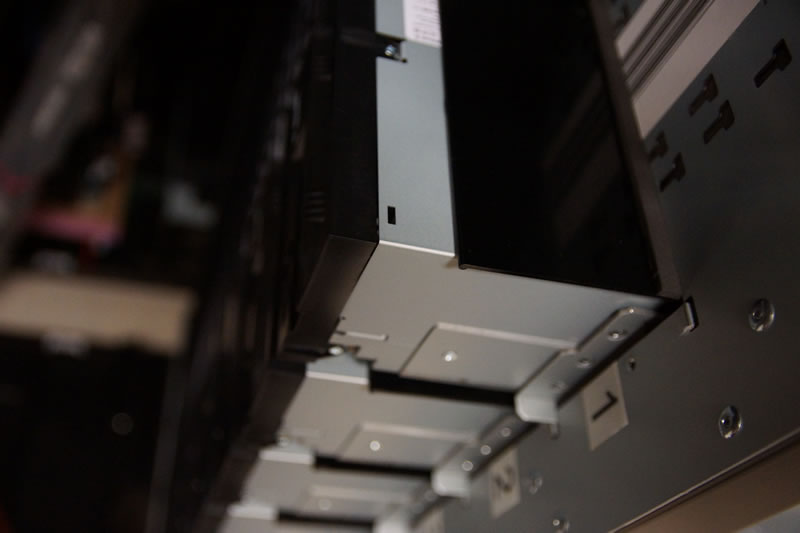
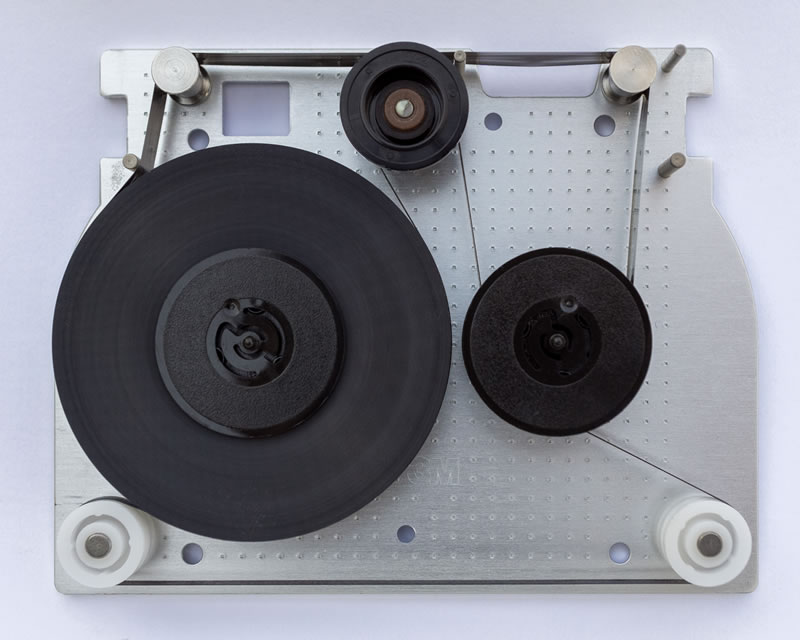
These images show two generations of LTO magnetic-tape storage. An LTO-3 cartridge holds 400 GB, equivalent to 400,000 MB, while an LTO-6 cartridge holds 2.5 TB, equivalent to 2,500,000 MB. The newer cartridge therefore provides 6.25 times the native capacity of the earlier model.
Where Are Data-Tape Cartridges Used?
Tape cartridges are primarily used by businesses, government agencies, research institutions, broadcasters and cloud-service providers. They are suitable for database backups, medical records, scientific datasets, financial archives, film masters and information that must be retained for legal or regulatory reasons.
Large organizations often use automated tape libraries containing many cartridges and robotic equipment. Software locates the required cartridge, places it in a drive and retrieves the requested data. Tape is also used for offline or “air-gapped” backups. A cartridge can be removed from the drive and disconnected from the network, helping protect a backup from ransomware and unauthorized modification.
When Is Tape Better Than Other Storage?
Magnetic tape can be better than disk or flash storage when an organization needs to retain a very large amount of data at a low cost per terabyte. Stored cartridges consume no electricity until they are loaded into a drive, making tape attractive for infrequently accessed archives. Cartridges are also removable, portable and easy to store at a separate location for disaster recovery.
Some tape systems support encryption and WORM—“write once, read many”—operation, which can prevent archived records from being altered. Manufacturers also design enterprise tape for long retention periods, although organizations must maintain suitable temperature and humidity, test their backups and migrate data before drives or formats become obsolete.
Tape is not better for every task. Locating an individual file may take longer because the tape must move to the correct position. Hard drives, SSDs and cloud services are generally more convenient for active files, applications and information that users open frequently. Tape works best as part of a broader storage plan: fast storage for everyday work and magnetic cartridges for economical, offline backup and long-term preservation.